
5g and home security: a new era
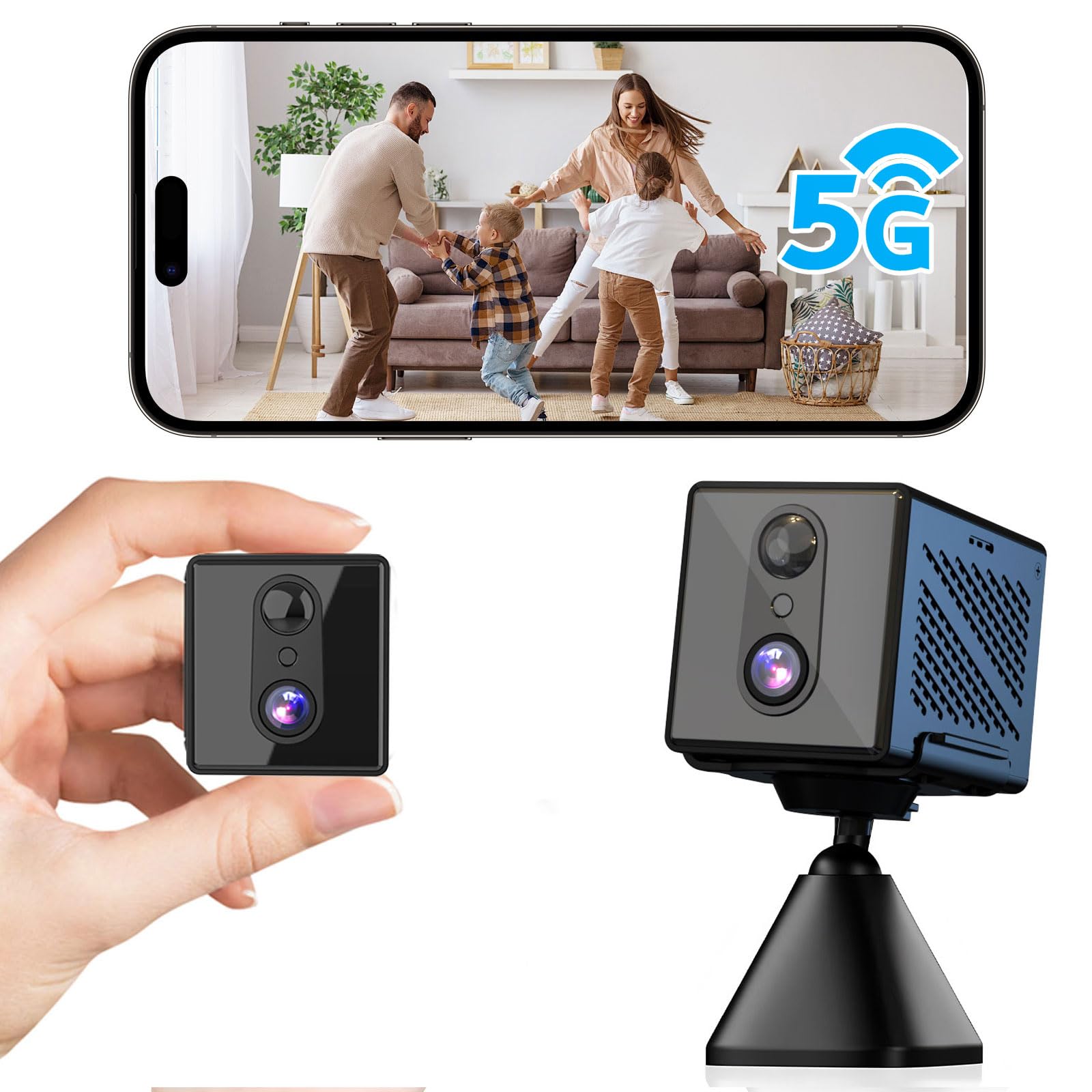
Most home security relies on Wi-Fi, which is fine until the video lags or your router gets hacked. 5G changes the math. It isn't just for downloading movies faster; it's about how fast a sensor can talk to an alarm.
The core benefit of 5G is its speed and, crucially, its low latency. This means a near-instantaneous connection between your security cameras, sensors, and the monitoring center, or your own phone. We’ve become accustomed to some delay in viewing live feeds or receiving alerts – 5G aims to eliminate that. I think people underestimate how much peace of mind that immediate responsiveness can provide.
I’m not suggesting everyone needs to rush out and upgrade immediately. But the potential for 5G to improve home security is significant, and it’s something homeowners should be aware of as the technology becomes more widely available. It's a move toward more proactive and reliable protection.
Why latency matters for alarms
Latency is often described as the delay between sending a signal and receiving a response. In the context of home security, this delay can be critical. Every second counts when an intruder is detected. Traditional Wi-Fi networks often have latency ranging from 50 to 100 milliseconds, and can be even higher depending on network congestion and distance from the router.
5G has much lower latency. Ericsson reported speeds as fast as 1 millisecond in tests, though you'll likely see 10-20 milliseconds at home. Cutting response time from a tenth of a second to a twentieth of a second sounds small, but it matters when a camera is trying to catch a face in motion.
Faster response times translate directly to quicker alarm verification. A monitoring center can assess a situation more rapidly with a clear, real-time video feed. Remote control of smart locks and lights becomes more immediate. And, importantly, professional monitoring services become more effective. They can dispatch emergency services with greater confidence and speed, potentially saving lives.
Connecting more than just cameras
While security cameras are often the first thing people think of, 5G’s benefits extend far beyond video surveillance. The ability to reliably connect a multitude of sensors is where things get really interesting. Think about environmental sensors – smoke detectors, carbon monoxide detectors – that can instantly alert you and the authorities to a dangerous situation.
5G allows for more robust and reliable connections for glass break detectors, door and window sensors, and even motion sensors placed further from the main control panel. This is especially useful for larger properties or homes with outbuildings. The increased bandwidth and lower latency mean these sensors can communicate more frequently and accurately, reducing false alarms.
I’m also intrigued by the potential for predictive security. Imagine a system that analyzes data from various sensors – motion patterns, door/window activity, environmental changes – to identify potential threats before they escalate. This level of intelligence could significantly enhance home protection. It’s possible this could even drive down insurance rates as risk decreases.
- Door and window sensors that trigger instantly
- Motion detectors
- Glass break detectors
- Smoke and carbon monoxide detectors
- Environmental sensors (temperature, humidity)
Cellular Backup: A More Reliable Connection
One of the biggest vulnerabilities of traditional home security systems is their dependence on a single internet connection. If your Wi-Fi goes down—due to a power outage, ISP issues, or a cut cable—your system may become compromised. 5G provides a robust cellular backup that addresses this issue.
Unlike traditional backup methods, such as battery backups that only power the control panel for a limited time, 5G offers always-on connectivity. Your security system remains fully operational even during extended power outages or internet service disruptions. This is a major advantage, especially in areas prone to severe weather.
Data costs are a real concern. Most 5G systems only burn data when an alarm triggers or you're watching a live feed, so you aren't paying for a constant stream. Check for plans specifically for IoT devices; they're usually cheaper than a standard phone line.
Security Concerns with 5G Networks
5G isn't bulletproof. The network uses 'slicing' and 'edge computing'—fancy terms that basically mean more software layers for hackers to target. Palo Alto Networks pointed out in a 2023 report that as the network gets more complex, the points of entry for a cyberattack multiply.
Network slicing, which allows operators to create virtual networks tailored to specific needs, introduces potential isolation issues. If one slice is compromised, it could potentially affect others. Edge computing, which brings data processing closer to the user, also presents new security challenges. The distributed nature of edge networks makes them more difficult to monitor and secure.
Fortunately, these risks are being actively addressed. 3GPP, the global standards body for mobile communications, is continuously developing new security features for 5G. Strong encryption protocols are essential, and many 5G security systems incorporate multi-factor authentication and other security measures to protect user data. It’s an evolving landscape, but significant effort is being put into securing these networks.
Current 5G Home Security Options
The market for dedicated 5G home security systems is still relatively new, but it’s growing. 5G Security, as their name suggests, offers commercially engineered alarm systems designed specifically for 5G infrastructure. They focus on providing customized solutions for businesses, but the technology is applicable to residential settings as well.
Currently, many major security companies aren’t offering fully integrated 5G systems. Instead, they allow you to connect their existing systems to a separate 5G hotspot. SimpliSafe, ADT, and Vivint all offer cellular backup options, but these typically use older 4G LTE technology, not the latest 5G. It's important to confirm the specific cellular technology used when considering these options.
DIY options are also emerging. Some smart home hubs and security cameras now support 5G connectivity, allowing you to build your own custom security system. However, these often require more technical expertise to set up and maintain. It’s a trade-off between flexibility and convenience. I'm still watching this space for more fully-featured consumer options.
What's coming next
Looking ahead to 2026 and beyond, the integration of 5G with home security will only become more sophisticated. We’ll likely see a rise in AI-powered security systems that can learn your habits and identify anomalies with greater accuracy. Edge computing will play a key role in faster threat detection, processing data locally rather than sending it to the cloud.
The seamless integration of 5G with smart home ecosystems is also on the horizon. Imagine a security system that automatically adjusts lighting, locks doors, and alerts authorities based on real-time data from various sensors and devices. This level of automation will provide a more proactive and responsive security posture.
I even speculate that we might see entirely new security features enabled by 5G that we haven’t even conceived of yet. As 6G technology emerges, it will likely further enhance security capabilities, offering even lower latency and greater bandwidth. The possibilities are truly exciting, and the focus will be on creating a truly intelligent and interconnected home security experience.
5G Security System Considerations
| Budget | Home Size | Security Needs | Monitoring | Recommended System Features |
|---|---|---|---|---|
| Low | Small | Basic | Self | Wireless door/window sensors, motion detectors, basic mobile app control. Focus on immediate alerts and local siren. |
| Low | Medium | Intermediate | Self | Expanded sensor coverage, integration with smart lighting, enhanced mobile app features (event history). |
| Medium | Small | Intermediate | Professional | Professional monitoring with cellular backup, video doorbell integration, environmental hazard detection (smoke/CO). |
| Medium | Medium | Advanced | Professional | Comprehensive sensor suite, indoor/outdoor cameras with cloud storage, smart home integration (locks, thermostats), advanced analytics for threat detection. |
| High | Large | Advanced | Professional | Full property surveillance with multiple cameras, perimeter protection, professional installation and maintenance, 24/7 professional monitoring with rapid response, and integration with emergency services. |
| Medium | Large | Basic | Self | Wider range wireless sensors, longer battery life, and improved connectivity to accommodate larger areas. |
Illustrative comparison based on the article research brief. Verify current pricing, limits, and product details in the official docs before relying on it.

No comments yet. Be the first to share your thoughts!