

Ai security: beyond motion detection
I remember getting a notification from my old security camera – "motion detected!’ – only to find it was a raccoon investigating the bird feeder. It"s a frustrating experience many homeowners share. Traditional security systems react to everything that moves, leading to a flood of false alarms and a general sense of alert fatigue. This is where AI-powered systems promise a real change.
Instead of simply detecting movement, these newer systems aim to understand what the camera is seeing. They move beyond basic detection and attempt to classify objects and behaviors, filtering out the harmless events and focusing on genuine threats. This isn't about just seeing something happen; it's about knowing what is happening.
These cameras use object recognition to tell a person apart from a swaying bush or a passing car. More advanced models use behavioral analysis to spot patterns, like someone pacing by your front door or sprinting away with a box. It’s the difference between a 'motion' alert and a 'theft in progress' alert.
Are traditional alarms still worth it?
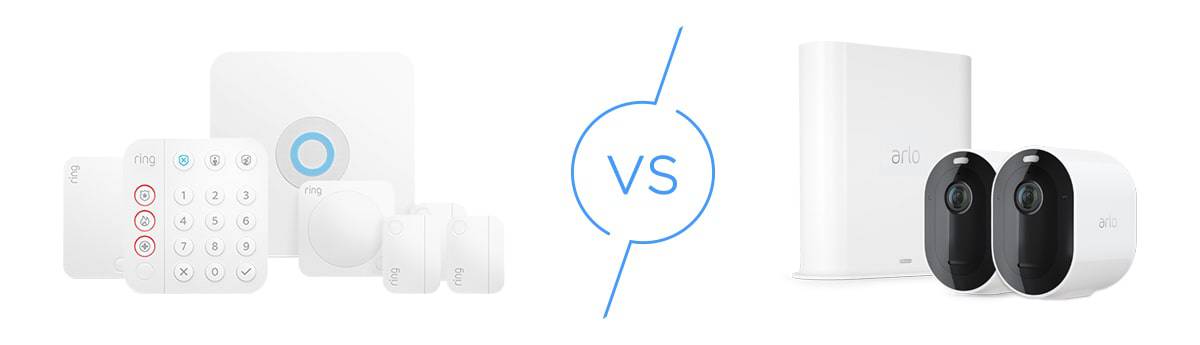
Despite the hype around AI, traditional alarm systems aren’t obsolete. They still offer a level of reliability and security that’s hard to beat, especially when professionally monitored. The core components – door and window sensors, motion detectors, a control panel, and a connection to a monitoring center – remain effective at deterring burglars and alerting authorities.
Here’s how they generally work: a sensor is triggered, sending a signal to the control panel. The panel then alerts a monitoring center, where trained personnel verify the alarm and, if necessary, dispatch emergency services. This established infrastructure, with decades of refinement, provides a certain peace of mind. They also generally have a lower upfront cost than fully AI-integrated systems.
However, traditional systems have significant drawbacks. The biggest is the high rate of false alarms, often triggered by pets, weather, or user error. These false alarms can lead to fines – some cities charge upwards of $100 for repeated false dispatches – and can desensitize both homeowners and emergency responders. They also lack the intelligence to distinguish between a genuine threat and a non-emergency, and rely heavily on human monitoring for verification.
Where the processing happens
AI-powered security systems address the limitations of traditional alarms by adding a layer of intelligence. Object recognition allows the system to differentiate between a person, a car, and a pet, significantly reducing false positives. No more alerts every time your cat walks past the camera. Person detection is even more refined, ensuring the system only flags actual human presence.
But the real power lies in behavioral analysis. These systems can learn what’s normal for your property and identify deviations. For example, a system might recognize that packages are usually delivered between 10 am and 4 pm. If someone approaches your door outside those hours and lingers, the system can flag it as suspicious. This is a leap beyond simply detecting motion.
A key question is where this processing happens: at the "edge’ (on the camera itself) or in the ‘cloud’. Edge computing means the AI analysis happens locally, offering faster response times and greater privacy, as video doesn’t need to be uploaded. Cloud processing leverages more powerful computing resources, potentially enabling more complex AI algorithms, but requires a reliable internet connection and raises data privacy concerns. Reducing false positives isn"t just about convenience; it means a more reliable system that you'll actually pay attention to when it alerts you.
- Object recognition: Identifies cars, pets, and people.
- Person Detection: Distinguishes people from other objects.
- Behavioral Analysis: Recognizes suspicious patterns (loitering, running).
AI Security System Features
- Person Detection - AI algorithms differentiate between people and other moving objects, reducing false alarms triggered by animals or weather. Systems like the Google Nest Cam with Battery offer this capability.
- Package Detection - Many systems, including those from Ring, now identify packages left at your door, sending a notification when a delivery is made. This helps prevent porch piracy.
- Vehicle Detection - This feature, available in cameras from Arlo, can distinguish between cars and other movement, useful for driveway monitoring and identifying potential suspicious activity.
- Animal Detection - Systems like those offered by Eufy Security can filter out motion events caused by pets or wildlife, minimizing unwanted alerts. Sensitivity settings often allow customization.
- Facial Recognition - Some cameras, like those in the Lorex system, offer facial recognition, learning to identify familiar faces. Important Note: This feature raises privacy concerns and should be used responsibly, with clear notification to anyone potentially recorded.
- Sound Recognition - Certain systems, including Abode, can detect specific sounds like glass breaking or shouting, potentially indicating an emergency even without visual confirmation.
- Smart Alerts & Zones - Many AI-powered systems, such as SimpliSafe, allow users to define specific zones and customize alerts based on the type of detection (person, vehicle, etc.) within those zones.
- Integration with Smart Home Platforms - Systems like those from Wyze integrate with platforms like Amazon Alexa and Google Assistant, allowing voice control and automation based on AI detections.
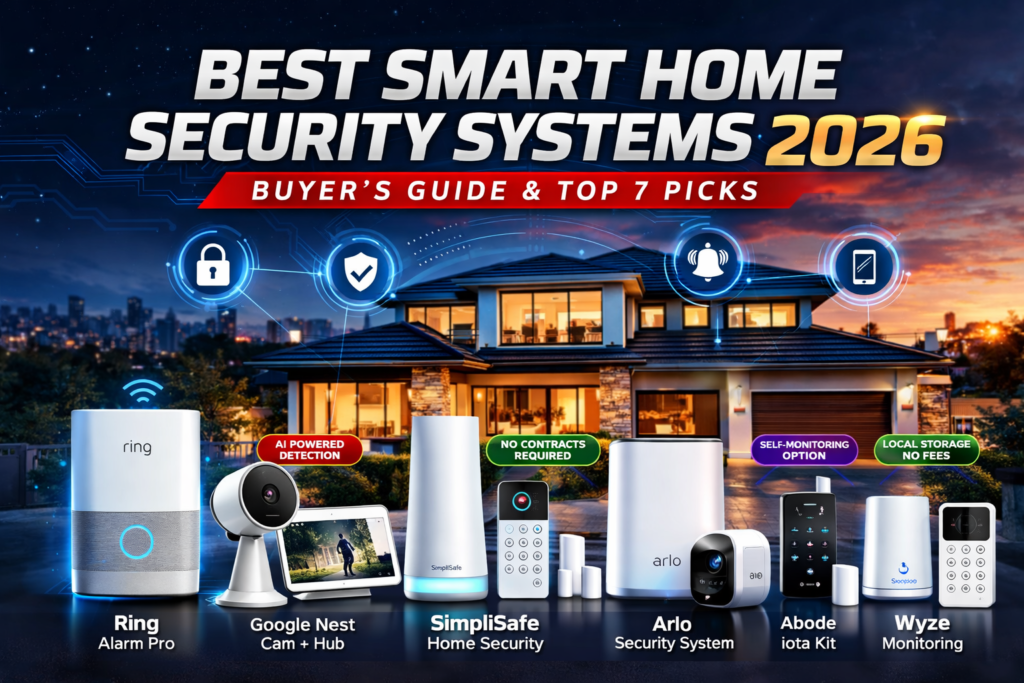
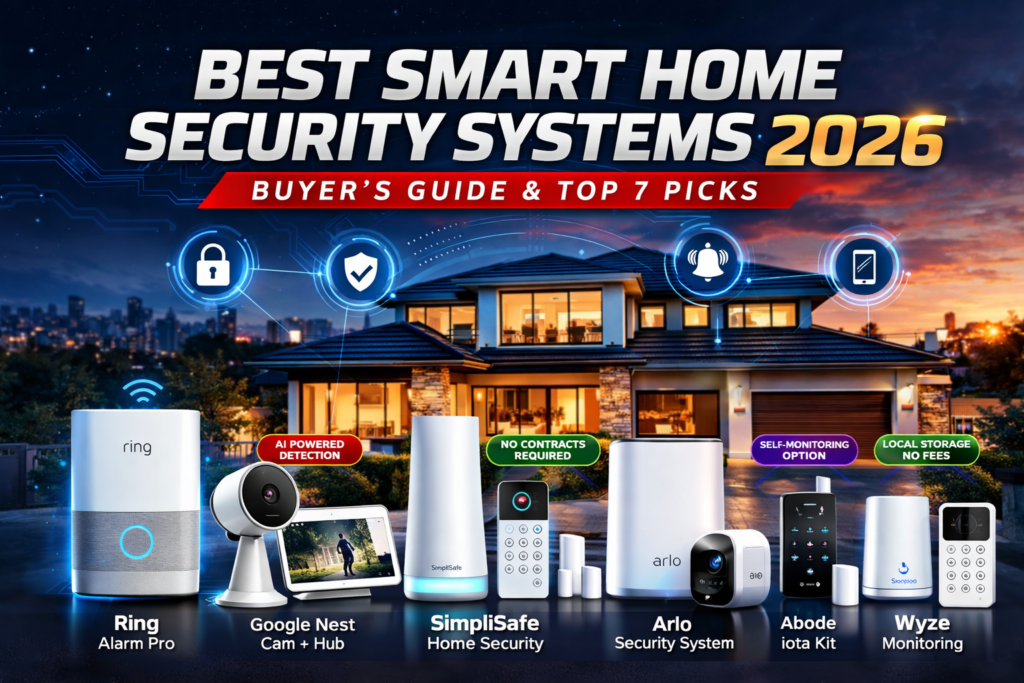
Top AI Security Systems of 2026
The market is moving fast. While these prices and features are accurate for early 2026, companies update their software monthly. Here is how the main players compare right now.
Brinks Home Pro is a well-established player offering professional installation and 24/7 monitoring. Their AI features focus on smart home integration and intelligent video analytics. Expect to pay around $200-$600 for equipment plus $30-$60/month for monitoring. A key advantage is their reputation for reliability, but the contract requirements can be restrictive.
SimpliSafe has become popular for its DIY approach and affordability. While their base system isn't heavily AI-focused, they offer optional AI-powered video recording and detection as an add-on. Equipment costs around $250-$500, with monitoring plans starting at $18/month. SimpliSafe is a good choice for renters or those who prefer a flexible system.
Cove emphasizes fast response times and professional monitoring. Their AI features include advanced motion detection and intelligent alerts. Expect equipment costs around $300-$700 and monitoring plans starting at $15/month. Cove is particularly strong in areas with limited cellular coverage.
Abode offers a more customizable system with a wider range of integrations. They provide robust AI-powered video analytics and smart home automation options. Equipment costs range from $200-$800, and monitoring plans start at $20/month. Abode appeals to tech-savvy users who want a highly configurable system.
A newer entrant, Kognition AI, is specifically focused on enterprise-level AI security cameras, but their technology is filtering down to residential applications. They excel at complex behavioral analysis and anomaly detection, but are generally more expensive and geared towards larger properties. Expect to pay upwards of $1000 for a complete system.
Featured Products

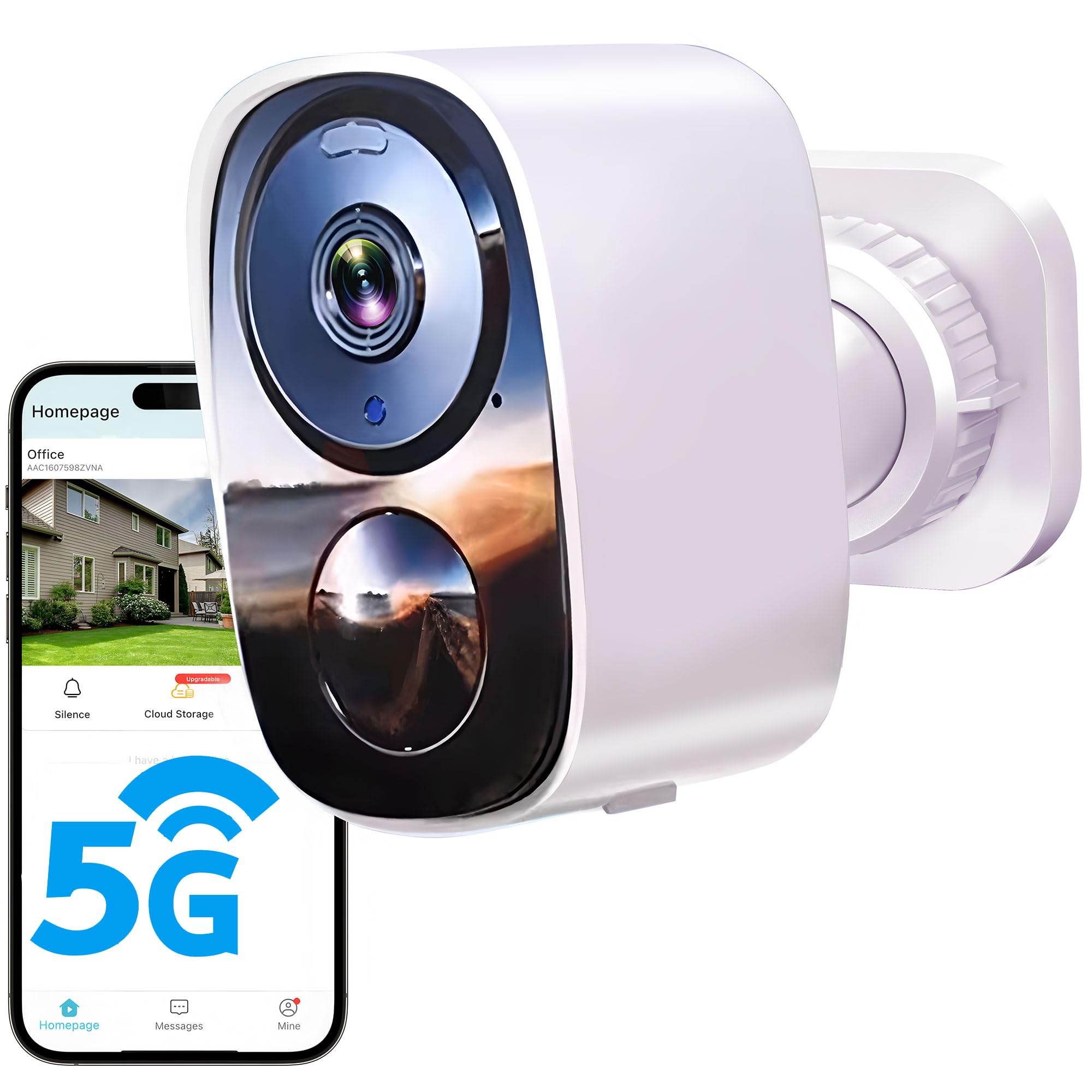
1080p HDR video · 180-degree field of view · Built-in floodlight with motion detection
This AI-powered security system offers advanced detection capabilities, helping you distinguish between important events and false alarms, providing enhanced peace of mind.

Built-in eero Wi-Fi 6 router · 14-piece kit including contact sensors, motion detectors, and keypad · Optional 24/7 professional monitoring
This AI-powered security system offers advanced detection capabilities, helping you distinguish between important events and false alarms, providing enhanced peace of mind.

8-piece wireless home security system · Optional 24/7 professional monitoring with no contract · Compatible with Alexa and Google Assistant
This AI-powered security system offers advanced detection capabilities, helping you distinguish between important events and false alarms, providing enhanced peace of mind.

2K video and HDR · Color night vision · Direct Wi-Fi connection, no hub needed
This AI-powered security system offers advanced detection capabilities, helping you distinguish between important events and false alarms, providing enhanced peace of mind.

2.5K AI security camera · Indoor/outdoor use · Vibrant color night vision
This AI-powered security system offers advanced detection capabilities, helping you distinguish between important events and false alarms, providing enhanced peace of mind.
As an Amazon Associate I earn from qualifying purchases. Prices may vary.
Privacy Concerns & AI Security
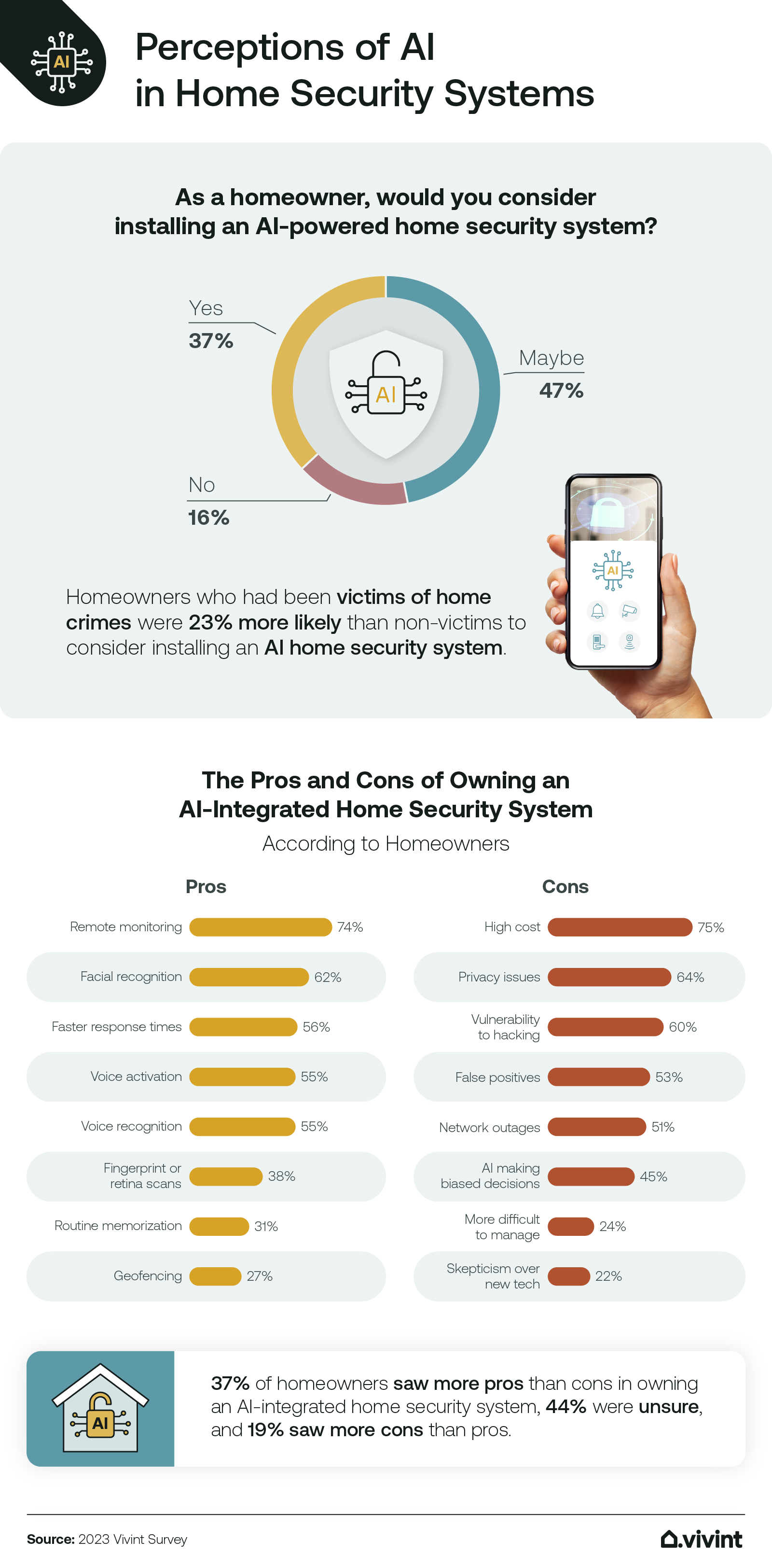
The use of AI in home security raises legitimate privacy concerns. AI-powered cameras collect and analyze video footage, and some systems even employ facial recognition technology. It's crucial to understand how your data is being used and protected. The potential for misuse, from data breaches to biased algorithms, is real.
Data storage practices vary significantly between providers. Some companies store video footage locally, giving you more control over your data, while others store it in the cloud. Encryption is essential to protect your data from unauthorized access. Look for systems that offer end-to-end encryption, meaning your video is encrypted both in transit and at rest.
Algorithm bias is a real problem. If a system was trained on limited data, it might misidentify people based on skin tone or clothing. I'd stick with companies that publish their transparency reports rather than those that keep their training methods secret.
AI Security System Costs: A Breakdown
The cost of an AI security system extends beyond the monthly monitoring fee. It’s important to consider the total cost of ownership, including equipment, installation, and potential add-ons. Equipment costs can range from a few hundred dollars for a basic DIY system to over $1000 for a professionally installed system with advanced features.
Installation fees can add another $100-$300 or more, depending on the complexity of the installation and whether you choose professional installation or DIY. Monitoring plans typically range from $15 to $60 per month, depending on the features included and the length of the contract. Add-ons, such as smart home integration and extended video storage, can further increase the cost.
DIY systems generally have lower upfront costs but require more time and effort to install and maintain. Professional installation offers convenience and peace of mind but comes at a higher price. The value proposition of AI security lies in its ability to reduce false alarms and provide more accurate threat detection, potentially saving you money on fines and insurance premiums.
AI-Powered Home Security System Comparison - 2026
| System Provider | Upfront Cost | Monthly Monitoring Cost | AI Feature Set | Privacy Features | Ease of Installation |
|---|---|---|---|---|---|
| Brinks Home | Medium | Medium | Good | Fair | Medium |
| SimpliSafe | Low | Low | Basic | Good | Easy |
| ADT | High | High | Excellent | Fair | Difficult |
| Vivint | High | High | Excellent | Poor | Difficult |
| Ring Alarm | Low | Low | Basic | Fair | Easy |
| Abode | Medium | Medium | Good | Good | Medium |
| Cove | Medium | Low | Basic | Good | Easy |
Illustrative comparison based on the article research brief. Verify current pricing, limits, and product details in the official docs before relying on it.
What is coming next
The evolution of AI security is far from over. We can expect to see even more sophisticated AI algorithms that can identify and respond to threats with greater accuracy. Advanced behavioral analysis will become more common, allowing systems to predict potential security breaches before they occur. Integration with other smart home devices will also become more seamless.
Predictive policing, while ethically complex, could play a role in future security systems. AI could analyze crime data and identify areas at high risk of burglary, proactively alerting homeowners and law enforcement. The automation of emergency response is another area of development, with AI potentially contacting authorities and providing them with real-time information.
Faster internet speeds and the widespread adoption of 5G will enable more robust cloud-based AI processing. This will allow for more complex algorithms and real-time analysis. As AI technology matures, we can expect to see a significant reduction in false alarms and a dramatic improvement in the effectiveness of home security systems.
No comments yet. Be the first to share your thoughts!