
The connected home in 2026
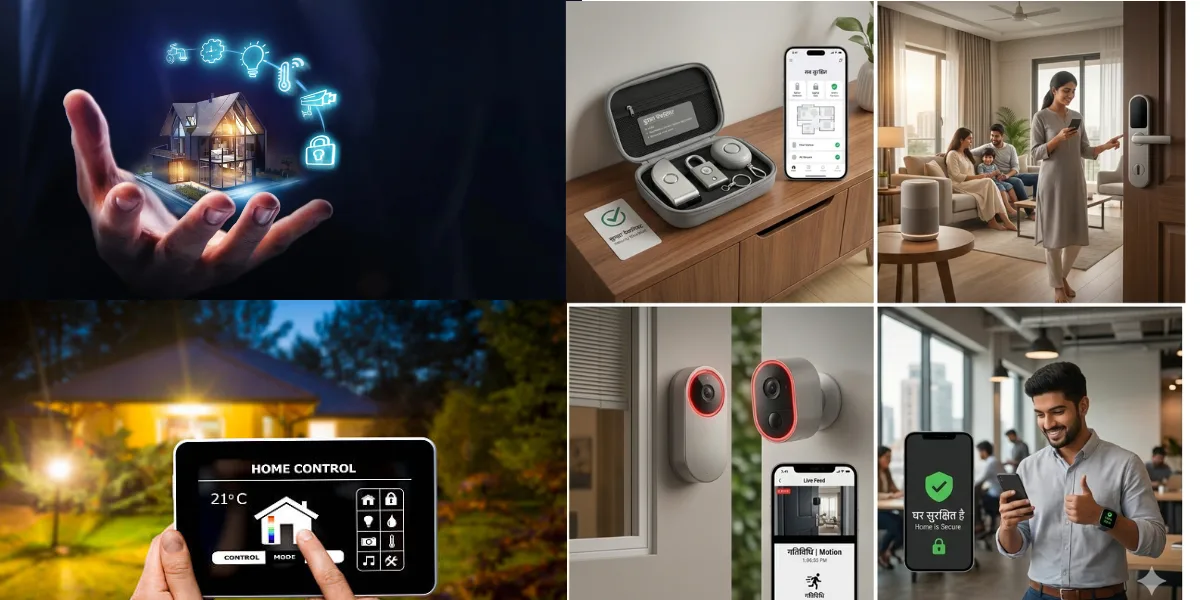
By 2026, smart home security is finally moving past isolated gadgets. Alexa, Google Assistant, and Apple’s HomeKit are starting to talk to each other. We aren't just looking for convenience anymore; we want systems that use AI to catch a threat before someone actually breaks a window.
Several factors are driving this shift. Broadband access continues to expand, even into rural areas, making reliable connectivity more widespread. The cost of sensors has steadily decreased, making comprehensive home security more affordable. Perhaps most importantly, consumers are becoming more comfortable with voice control and automation, embracing the idea of a home that actively protects itself.
This isn’t to say it’s all smooth sailing. Fragmentation remains a significant challenge, with different ecosystems often refusing to play nicely with each other. Privacy concerns are also paramount, as the more connected our homes become, the more data is collected about our lives. The ideal scenario in 2026 involves a secure, integrated system that respects user privacy, but achieving that balance is an ongoing process.
We're seeing a move away from simply reacting to events – a triggered alarm, a broken window – towards predictive security. Systems are starting to learn routines, recognize anomalies, and proactively alert homeowners to potential issues. This requires more sophisticated AI and machine learning, but the potential benefits are substantial.
Alexa: more than just voice commands
Amazon's Alexa has become a central hub for many smart homes, and its role in security is expanding. Initially, Alexa’s security features were limited to arming and disarming systems with voice commands, but now it's capable of much more. Alexa can listen for the sounds of breaking glass or a smoke alarm and send alerts through the Echo device and the Alexa app.
Amazon Guard is a strange case. It promised to listen for glass breaking and flicker lights to make it look like you were home, but Amazon stopped new sign-ups in 2020. Most of those features are just part of the standard Alexa subscription now, though the branding is messy.
The biggest concern with Alexa, and any always-on listening device, remains privacy. Amazon collects data on voice interactions, and while they claim this data is anonymized and used to improve the service, it’s a valid concern for many users. Amazon has made efforts to address these concerns, offering features like the ability to review and delete voice recordings, but the fundamental issue of data collection persists.
Recent security updates have focused on strengthening encryption and improving authentication protocols. There have been instances of vulnerabilities being discovered in Alexa-enabled devices, however, and it’s crucial to keep devices updated with the latest firmware to mitigate those risks. Regularly reviewing Alexa’s privacy settings is also a good practice.
- Regularly review Alexa’s privacy settings.
- Keep devices updated with the latest firmware.
- Check which third-party skills have permission to access your microphone or camera.
Google's Nest ecosystem
Google’s approach to smart home security revolves heavily around the Nest ecosystem. Nest products, like the Nest Cam and Nest Protect, integrate seamlessly with other Google services, such as Google Assistant and Google Home. This integration allows for voice control, automated routines, and a unified smart home experience.
The original Nest Secure alarm system is less prominent now, with Google focusing on individual Nest security products and integration with existing systems. Nest Cams, for example, can detect people, animals, and packages, sending targeted alerts to your phone. They also offer features like intelligent alerts that differentiate between important events and background noise.
Google wins on AI. Its cameras can tell the difference between a neighbor and a stranger, or a cat and a FedEx box. This relies on the massive datasets Google has been feeding its algorithms for years, which makes the alerts much more accurate than cheaper competitors.
Google’s privacy policies are similar to Amazon’s – data is collected to improve services, but it also raises privacy concerns. Google allows users to control their data and opt out of certain tracking features, but navigating these settings can be complex. Comparing Google’s and Amazon’s policies reveals nuanced differences in data usage and retention.
Apple HomeKit and the privacy trade-off
Apple’s HomeKit ecosystem takes a different approach to smart home security, with a strong emphasis on privacy. Apple’s marketing consistently highlights its commitment to protecting user data, and this translates into features like end-to-end encryption and local processing of data whenever possible.
However, this privacy focus comes with some trade-offs. HomeKit has historically had a smaller selection of compatible devices compared to Alexa and Google. Apple’s strict security requirements can make it difficult for manufacturers to get their products certified for HomeKit. The user experience, while generally polished, can sometimes feel more complex than that of its competitors.
HomeKit Secure Video, for example, allows users to store video recordings locally on their iCloud account or on a HomePod, rather than in the cloud. This enhances privacy but requires sufficient iCloud storage. The types of devices compatible with HomeKit range from door locks and cameras to sensors and thermostats.
Whether Apple will fully compete with Alexa and Google on feature parity remains uncertain. While Apple continues to expand HomeKit’s capabilities, it seems unlikely to abandon its privacy-first approach. The future of HomeKit may lie in niche applications where privacy is a top priority.
- HomeKit prioritizes local processing of data.
- End-to-end encryption is standard.
- Device compatibility is more limited than with other ecosystems.
Smart Home Security Ecosystem Comparison - 2026 Outlook
| Ecosystem | Privacy | Device Compatibility | Ease of Use | AI Features |
|---|---|---|---|---|
| Alexa | Medium | Wide | Easy | Developing |
| Medium | Wide | Easy | Developing | |
| Apple (HomeKit) | High | Moderate | Moderate | Basic |
| Samsung SmartThings | Medium | Wide | Moderate | Developing |
| Hubitat Elevation | High | Moderate | Complex | Basic |
| IFTTT | Medium | Wide | Moderate | Basic |
Illustrative comparison based on the article research brief. Verify current pricing, limits, and product details in the official docs before relying on it.
Matter and the reality of interoperability
The Matter standard is arguably the most important development in smart home interoperability. Developed by the Connectivity Standards Alliance (CSA), Matter aims to create a universal language for smart home devices, allowing them to work together seamlessly regardless of manufacturer or ecosystem.
The potential impact of Matter on security is significant. By simplifying the connection process and reducing fragmentation, Matter could make it easier for users to build secure, integrated smart home systems. However, it also introduces new challenges. A standardized protocol could create a single point of failure, making the entire ecosystem vulnerable to attack.
Implementing Matter isn’t without its hurdles. Ensuring compatibility between different devices and platforms requires extensive testing and collaboration. There have been reports of bugs and security vulnerabilities in early Matter implementations, highlighting the complexity of the project. Adoption rates are growing, but widespread adoption is still a few years away.
As of late 2026, Matter supports several device types including lights, plugs, switches, thermostats, and door locks. Security cameras and video doorbells are expected to be supported, but their integration has been slower. The success of Matter ultimately depends on the continued commitment of major players in the smart home industry.
DIY vs. professional monitoring
The choice between DIY and professionally monitored smart home security systems remains a key decision for consumers. DIY systems, like Ring Alarm and SimpliSafe, offer affordability and flexibility, allowing users to install and manage their security themselves. Professional monitoring adds an extra layer of security, with a monitoring center responding to alarms and contacting emergency services.
Pricing models for both DIY and professionally monitored systems have become increasingly competitive. DIY systems typically require an upfront investment in equipment, but monthly fees are often lower than those for professionally monitored systems. Professional monitoring plans vary in price depending on the features included, such as cellular backup and video storage.
Cellular backup remains a valuable feature, providing a reliable connection even when the internet goes down. In 2026, the need for cellular backup is still relevant, particularly in areas prone to power outages or internet disruptions. However, the increasing reliability of broadband internet is reducing the necessity for some users.
The latest trends in professional monitoring services include AI-powered threat detection and video verification. These features can help reduce false alarms and improve response times. Some companies are also offering customizable monitoring plans, allowing users to choose the level of protection they need.
AI and edge computing
The future of smart home security is likely to be shaped by several emerging technologies. Artificial intelligence (AI) will play an increasingly important role in threat detection, enabling systems to identify and respond to suspicious activity more effectively. AI can analyze patterns, learn from data, and proactively mitigate risks.
Edge computing, which involves processing data locally on the device rather than in the cloud, is another key trend. This can reduce latency, improve response times, and enhance privacy. Edge computing is particularly useful for applications like facial recognition and object detection, where real-time processing is critical.
The integration of biometric authentication, such as fingerprint scanning and facial recognition, is also gaining traction. Biometric authentication can provide a more secure and convenient way to access your smart home devices and systems. However, it also raises privacy concerns, as biometric data is highly sensitive.
5G and other new technologies will further enhance smart home security. 5G offers faster speeds, lower latency, and increased bandwidth, enabling more reliable and responsive security systems. These technologies will likely unlock new possibilities for smart home security in the years to come.
- AI will improve threat detection and response times.
- Edge computing will enhance privacy and reduce latency.
- Biometric authentication like fingerprints will replace easy-to-guess PIN codes on smart locks.
- 5G will enable faster and more reliable connectivity.

No comments yet. Be the first to share your thoughts!